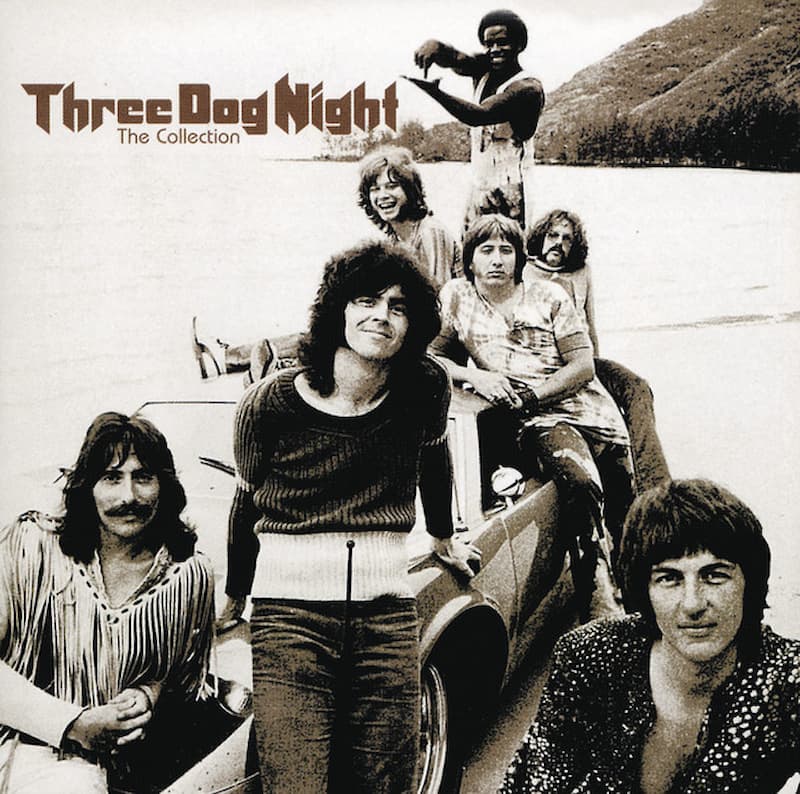
About The Song
In 1954, Brown v. Board of Education became a national turning point when the U.S. Supreme Court ruled that racially segregated public schools were unconstitutional. For the embattled American left, it was a rare reason to celebrate. In 1955, two folk songwriters who had both been blacklisted during McCarthyism—Earl Robinson and David I. Arkin (Alan Arkin’s father)—wrote “Black And White” as a hopeful tribute to that ruling. They pictured a new world where Black and white children could learn together in harmony.
That world didn’t arrive. Segregation didn’t vanish; it mutated into other systems. Still, 17 years after Robinson and Arkin wrote the song, it became a big, bouncy Three Dog Night hit. The change is hard to ignore: is it progress when a civil-rights dream reaches pop radio, or proof that history turns into kitsch at high speed?
Before Three Dog Night, the song went through several lives. Pete Seeger—another victim of the blacklist—recorded it in 1956. He sang it like a kids’ song, with banjo and whistling children. Seeger’s version is strikingly optimistic; the confidence in the words feels almost fragile when you remember how long the struggle would continue.
In 1971, the Jamaican reggae group Greyhound cut a sweet, expansive pop rendition. Their version became a UK hit, reaching No. 6. The message takes on extra resonance coming from Black musicians from a poor country shaped by colonial exploitation. While touring Europe, Three Dog Night heard Greyhound’s record on a Dutch radio station and immediately recognized it as a potential smash.
Three Dog Night’s arrangement stayed close to Greyhound’s, right down to the restless organ line. It isn’t as graceful, and it doesn’t carry the same sense of stakes, but it’s well-built pop. The band added its own hooky details—an insistent piano figure and perfectly timed cowbells—and, like Seeger, they brought in a children’s choir. That choir adds pathos, even as it nudges the song toward a bright, simplified feel.
But simplification came with a cost. Robinson and Arkin had written a verse that made the Supreme Court connection explicit: “Their robes were black / Their heads were white… / Nine judges all set down their names / To end the years and years of shame.” Three Dog Night removed that verse. Maybe they worried a direct reference to an old court case would date the song. Yet taking it out also removes the clear naming of racism as a national shame that demanded acknowledgment.
Even the lead vocal shaped the message. Three Dog Night had three lead singers and three No. 1 singles, each fronted by a different member: Cory Wells on “Mama Told Me (Not To Come),” Chuck Negron on “Joy To The World,” and Danny Hutton on “Black And White.” Hutton had experience making music for Hanna-Barbera cartoons, and his delivery fits a bright, colorful world where problems can be solved within half an hour, commercials included.
Three Dog Night’s take is well-intentioned, catchy, and sticky enough to lodge in your brain. It may even have helped some listeners believe a better world was possible. But decades later, the lyric about children learning “to see the light” can carry a tinge of sadness, because separation persists through redlining, redistricting, and economic structures that keep schools unequal. That isn’t the band’s fault—but it makes the song harder to hear as a simple triumph.
Video
Lyric
The ink is black, the page is white
Together we learn to read and write
A child is black, a child is white
The whole world looks upon the sight
A beautiful sightAnd now a child can understand
That this is the law of all the land
All the landThe world is black, the world is white
It turns by day and then by night
A child is black, a child is white
Together they grow to see the light
To see the lightAnd now at last we plainly see
We’ll have a dance of liberty
LibertyThe world is black, the world is white
It turns by day and then by night
A child is black, a child is white
The whole world looks upon the sight
A beautiful sightThe world is black, the world is white
It turns by day and then by night
A child is black, a child is white
Together they grow to see the light
To see the lightC’mon, get it, get it
Ohh-ohhhh yeah
Yeah
Keep it up now, around the world
Little boys and little girls
Yeah, yeah-eah, oh-ohhh